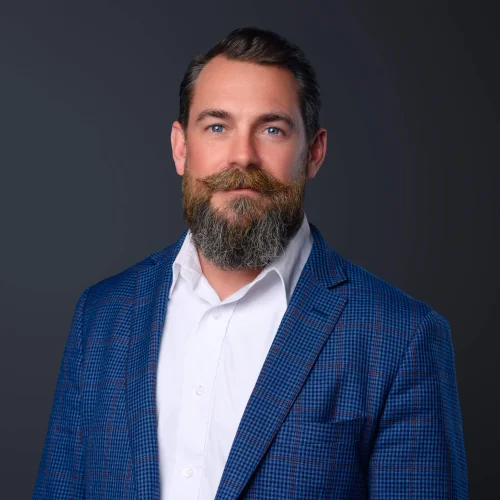
Interviewed by Michael Nelson • Article written directly from the recorded transcript using AI, editor-reviewed by Taylor Stone, and subject-verified.
For Dave Borland, becoming an Expert EOS Implementer was not the result of a carefully mapped career plan. It grew out of years of starting businesses, learning the limits of trying to do everything himself, and seeing firsthand how systems could change a company.
After implementing EOS in a business that needed a major turnaround, Borland said the system helped produce an “almost $1 million turnaround” in about six months. That experience eventually led him to help other companies install, understand, and use the same operating system.
From Entrepreneurship to EOS
Borland said he started his first business at 26, influenced in part by watching his father become an entrepreneur. Over time, he started multiple businesses, some of which succeeded and others that did not. Early on, he relied largely on trial and error, describing a period when there was “no system” and he was simply trying to make things work.
That changed as he began learning about systems, processes, and leadership. He also spent years working in areas such as web development and marketing in a fractional capacity, helping different clients rather than operating a single business in one industry. Eventually, EOS gave him a framework that connected those lessons.
Borland describes EOS as more than a collection of business tools. “This is about a vision that somebody cast,” he explained, followed by a shared direction, execution, and accountability. For him, the goal is to get a company’s people working toward the same vision while creating a healthier organization along the way.
Six Components That Move a Business Forward
Borland’s work with Expert EOS Implementer centers on the six key components of the EOS Model: vision, people, data, process, issues, and traction.
The process begins with establishing a shared vision and determining whether the right people are in the right seats. Data then provides a way to evaluate what is actually happening instead of relying on assumptions or emotion. “Our data does not lie. If you have the right data and you track it,” Borland said.
From there, businesses document and follow their processes, identify issues, and use a consistent meeting cadence to solve them. Borland particularly emphasizes solving small recurring problems before they continue consuming an owner’s time. He calls one example a “ten-minute problem,” arguing that repeatedly eliminating small interruptions can compound into meaningful amounts of recovered time.
Building Businesses That Can Run Without the Owner
For Borland, the ultimate measure of a successful implementation is not simply having a system in place. It is helping the business become increasingly self-sustainable. He works with leadership teams through periodic sessions rather than remaining embedded in the company indefinitely, with the goal that eventually the team can operate the system on its own.
That philosophy connects directly to one of the questions Borland asks business owners considering EOS: “Are you getting what you want?” He encourages owners to look at where they are now, imagine where they want to be three years from now, and then honestly assess whether continuing to operate the same way will get them there.
Borland also points business owners toward an organizational checkup consisting of 20 questions that can help them assess whether they need EOS tools. For those who want to explore the system further, he offers a 90-minute conversation to help them understand the approach, whether or not they ultimately hire an implementer.
For Dave Borland, Expert EOS Implementer, the objective is ultimately straightforward: help business owners build organizations that do not depend on the owner being involved in every decision, every problem, and every day. As Borland put it, “It’s this idea that for a time you’re their coach. You’re not their coach forever.”